Thursday, February 9, 2012

Sydney Taylor Blog Tour: The Blood Lie: A Novel, by Shirley Vernick

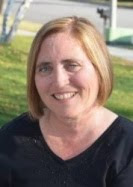
Shirley Vernick

I am delighted to welcome today to the Fourth Musketeer writer Shirley Vernick, whose first novel, The Blood Lie, published by Cinco Puntos Press, was selected as a Sydney Taylor Honor Book for teens.  Shirley has kindly agreed to participate in an interview today about her novel as part of the Sydney Taylor Award Blog Tour.

Q:  The Blood Lie is based on a little known real-life event from the history of your home town, Massena, New York.  An innocent Jewish boy was accused of ritual murder when a Christian girl disappeared, bringing to America the infamous "blood lie," in which Jews are accused of murdering Christian children in order to use their blood to make ritual bread.   Could you tell us a little bit about how you discovered this story and why you decided to use it as a basis for your first novel for young people?

A:  I was already in college when I first learned about it. I came home for fall break my sophomore year with an assignment for a sociology class. Students had to identify a local community conflict – past or present – and write a paper about it. I remember thinking, What am I going to do? No juicy controversies ever happen in my dinky little town of Massena, New York. So I asked my dad, who also grew up in Massena, if he had any ideas. That’s when he told me, for the first time, about the blood libel that happened in Massena when he was a high school senior. It was just before Yom Kippur, and a little Christian girl disappeared while playing in the woods near her house. The next thing you know, the local Jews – including my dad’s family – were being accused of kidnapping and murdering that little girl and baking her blood in their “holiday foods.” I couldn’t believe what I was hearing. In America? In the 20th century?  It sounded more like a page out of Eastern Europe in the Middle Ages.

I knew I wanted to write something more than a term paper the minute I learned about the Massena blood libel. I always wanted to be a writer, and this was something that not only spoke to me, but grabbed me by the throat and screamed at me. I felt compelled to illuminate this episode of Jewish-American history, as well as to inspire readers to contemplate the consequences of, and possible responses to, intolerance. 

Q:  Jack, your hero, wants nothing more than to leave Massena to study music, even before the blood lie incident.  From your own research, what do you think some of the pros and cons of Jewish life in a small town were like in that era (the 1920's)?

A:  Personally, I think the biggest pro was the kind of community solidarity you get when you're a small newcomers group sharing a deeply felt common heritage. However, along with that came the everyone-knows-your-business-and-has-some-advice-to-give lack of privacy.

The pressure to assimilate was a hardship for many small-town Jews. For instance, imagine trying to be a merchant in a one-corporation village like Massena, where everyone gets paid on Friday and does their shopping on Saturday. How can you survive if you don't stay open on Saturdays? At the same time, assimilation was a pro for many of the younger ones, who deemed it synonymous with freedom and opportunity.

Q:  What kind of reception has your book had in Massena?  Were there people in the town who resented your bringing to light an ugly incident that they might well have preferred remain hidden?

A:  I'm pleased – and relieved – to report that Massena has given the book a warm, open-minded reception. The current residents include fourth generation natives, relative newcomers, and everything in between. The people I've talked to say they didn't know about the Massena blood libel, but they did know about past and present currents of bigotry. I gave a talk at Massena's public library in December, and the audience demonstrated keen interest in the history of the story. The local high school's book club plans to read the book, as well. 

A couple of Massena residents did write on my Facebook page that they wished I'd made the book nonfiction. I explained that, since there is little or no clear documentation of the details of this blood libel, I had to go beyond the basic facts. So I did my best to adhere to the essence of the real event, and then I added details, including personalities and subplots.

Q:  You have done quite a bit of professional writing, with articles published in different women's magazines, national newspapers, and college publications.  How did you find the process of writing and researching a novel for young people different than other writing you have done?  

A:  As obvious as this sounds, I get to write more words with a book-length story. This makes a huge difference because it allows me to delve more fully into the story, the backstory and the side stories, which is much more satisfying for me as an author. Since the novel is based on true events, I still had to do a lot of primary and secondary research, so that wasn't all that different. Writing for young adults instead of, well, older adults, felt very natural. Apparently, my creative side has a young-adult voice. 

Q:  Could you tell us about your future writing projects?  Do you have other historical novels in the works?  

A:  I have been incurably bitten by the novel-writing bug. Currently in the works are a young-adult historical novel set in Israel, a young-adult paranormal story with strong historical elements, and a middle-grade adventure book.

Shirley, mazel tov for receiving the Sydney Taylor Honor award for your very first novel!   And don't forget to check out the other Sydney Taylor blog tour stop today at Frume Sarah's World.  

Sunday, February 5, 2012

Sydney Taylor Award Blog Tour Begins!

I am pleased to be taking part again in the Sydney Taylor Book Award Blog Tour, which begins today.  I have posted the full schedule below; my interview with Shirley Vernick, author of The Blood Lie, a Sydney Taylor Honor winner in the Teen category, will be posted on Thursday.  Please check out the upcoming interviews with the winning authors and illustrators below!

THE 2012 SYDNEY TAYLOR BOOK AWARD BLOG TOUR

SUNDAY, FEBRUARY 5, 2012

Susan Campbell Bartoletti, author of Naamah and the Ark at Night
Sydney Taylor Honor Award winner in the Younger Readers Category

Holly Meade, illustrator of Naamah and the Ark at Night
Sydney Taylor Honor Award winner in the Younger Readers Category

Shelley Sommer, author of Hammerin' Hank Greenberg, Baseball Pioneer
Sydney Taylor Honor Award winner in the Older Readers Category

MONDAY, FEBRUARY 6, 2012

Marcia Vaughan, author of Irena's Jar of Secrets
Sydney Taylor Honor Award winner in the Older Readers Category
Ron Mazellan, illustrator of Irena's Jar of Secrets
Sydney Taylor Honor Award winner in the Older Readers Category

TUESDAY, FEBRUARY 7, 2012

Trina Robbins, author of Lily Renee, Escape Artist: From Holocaust Survivor to Comic Book Pioneer
Sydney Taylor Honor Award winner in the Older Readers Category

Anne Timmons (and possibly Mo Oh), illustrators of of Lily Renee, Escape Artist: From Holocaust Survivor to Comic Book Pioneer
Sydney Taylor Honor Award winner in the Older Readers Category 

Morris Gleitzman, author of Then
Sydney Taylor Honor Award winner in the Teen Readers Category

WEDNESDAY, FEBRUARY 8, 2012

Michael Rosen, author of Chanukah Lights
Sydney Taylor Book Award winner in the Younger Readers Category

Robert Sabuda, illustrator/paper engineer of Chanukah Lights
Sydney Taylor Book Award winner in the Younger Readers Category

Susan Goldman Rubin, author of Music Was It: Young Leonard Bernstein
Sydney Taylor Book Award winner in the Older Readers Category

Robert Sharenow, author of The Berlin Boxing Club
Sydney Taylor Book Award winner in the Teen Readers Category

THURSDAY, FEBRUARY 9, 2012

Durga Yael Bernhard, author & illustrator of Around the World in One Shabbat
Sydney Taylor Honor Award winner in the Younger Readers Category

Shirley Vernick, author of The Blood Lie
Sydney Taylor Honor Award winner in the Teen Readers Category

FRIDAY, FEBRUARY 10, 2012

Eric Kimmel, author of The Golem's Latkes
Sydney Taylor Notable Book, and winner of the National Jewish Book Award

Gloria Spielman, author of Marcel Marceau, Master of Mime
Sydney Taylor Notable Book, and finalist for the National Jewish Book Award

Richard Michelson, author of Lipman Pike: America's First Home Run King
Sydney Taylor Notable Book, and finalist for the National Jewish Book Award

Sydney Taylor Award Winners – Wrap-Up
All winners, all categories
at The Whole Megillah

Saturday, February 4, 2012

World Book Night! Be a Book Fairy and Give Away Books in your Community!

There's still a couple days left to apply to distribute free books in your community on World Book Night on April 23!   The deadline has been extended to Monday, Feb. 6 at midnight EST.  I just received word that I was selected as one of the givers, although I don't know if I was selected to distribute The Hunger Games (my number #1 pick from their list of 30 best selling books)--apparently they were deluged with requests for this title!

If you're not familiar with World Book Night, it's an annual celebration designed to spread a love of reading and books, held in the U.S. as well as the U.K. and Ireland.  Thousands of free paperback books will be distributed through bookstores and libraries and each "giver" will receive a box of 20 paperback books to pass out to at a coffee shop, hospital, church or community center, shopping mall or school to strangers or people that you might know but who aren't frequent readers.

There's still time to apply (the application form takes only a few minutes to complete!) so spread the word among your friends and family.  This event is sponsored by the publishing community, which is donating the books, so jump on the bandwagon and be a book fairy for one night!


Wednesday, February 1, 2012

Black History Month 2012

In honor of Black History month, here at the Fourth Musketeer I will be reviewing a number of new titles focusing on this important topic.  Watch out this month for reviews of the following:

Nonfiction
Jazz Age Josephine, by Jonah Winter, illustrated by Marjorie Priceman, a new picture book biography of the famous dancer and entertainer Josephine Baker;

Words Set Me Free:  The Story of Young Frederick Douglass, by Lesa Cline-Ransome, a new picture book biography;

Zora:  The Life of Zora Neale Hurston, by Dennis Brindell Fradin and Judith Bloom Fradin, a new biography for young readers;

Abraham Lincoln and Frederick Douglass:  The Story Behind an American Friendship, by Russell Freedman;

Black and White:  The Confrontation between Reverend Fred L. Shuttlesworth and Eugene "Bull" Connor, by Larry Dane Brimmer;

Historical Fiction
Crow, by Barbara Wright;

The Mighty Miss Malone, by Christopher Paul Curtis;

Chasing the Nightbird, by Krista Russell

The U.S. Census Bureau, to commemorate Black History Month, has published a slew of interesting statistics about African-Americans in the U.S.  This is part of the Census Bureau's Facts for Feature series.

For the best in African-American literature for children, at least according to the American Library Association, you can't go wrong with perusing the Coretta Scott King awards.  This year's winner, Kadir Nelson's Heart and Soul, is particularly appropriate for those looking for books for Black History Month, since it covers the entire history of America as seen through the experience of African-Americans. The paintings by Kadir Nelson are incredibly powerful, and the text offers a good overview of the African-American journey.

Also, Reading Rockets website has a terrific compilation of resources for Black History Month, including book lists, classroom activities, interviews with notable authors and illustrators, guides to Black history, television programs, and more.  Check it out for lots of great ideas on how to celebrate!

I also recently discovered another fabulous resource for Black History and American History in general, Kate Kelly's America Comes Alive!  This month she is publishing a series of fascinating profiles of distinguished African Americans throughout U.S. history--you can subscribe to her posts through her website.

Tuesday, January 31, 2012

Book Review: Breaking Stalin's Nose, by Eugene Yelchin (Henry Holt, 2011)

Recommended for ages 8-12.

Illustrator Eugene Yelchin's first novel, Breaking Stalin's Nose, is a brilliantly conceived expose of the horrors of life in Stalin's Russia, seen through the eyes of a very naive young boy.  And since the book was recently recognized with a Newbery Honor, it is likely to make it onto the shelves of school and public libraries around the country.

Ten-year old Sasha has been dreaming of being a Soviet Young Pioneer ever since he can remember, and he can recite all the Young Pioneer laws by heart. He loves Comrade Stalin like a revered grandfather, but when the long-anticipated ceremony to be inducted into the Young Pioneers is finally to take place, everything seems to go wrong.  When his father is taken away by the police, arrested as an enemy of the people, Sasha slowly begins to wonder if everything he has learned about Stalin and the Soviet state is a lie.


With its naive, optimistic narrator, this book reminded me very much of Morris Gleitzman's Once, John Boyne's The Boy in the Striped Pajamas, and Jerry Spinelli's Milkweed. Like the heroes in those novels, Sasha's naivete manages to be somehow funny and heartbreaking at the same time. Through his eyes, we see the incongruity of the Soviet propaganda and the realities of life in a society where even children were encouraged to inform on their parents.

Although there are many novels for children about World War II, there are few about Stalin's Russia, and this book definitely fills a gap in the literature.   Despite the sophisticated subject matter, the simplicity of the language in the book is suitable for children in elementary school, and would work well as discussion for a book club as well. Yelchin provided the dramatic graphite black and white illustrations for the book as well as the text.


An author's note provides some background on Stalin's reign of terror, and, paradoxically, how few people of Yelchin's generation (he grew up in the Soviet Union in the 1960's) were aware of the scale of Stalin's crimes, which were carried out in secrecy.  There is also an excellent website for the book, which allows users to click on various images to learn more about Stalin, Sasha's dad, the Young Pioneers, Sasha's school, Lubyanka Prison, and other topics dealt with in this slim but powerful book.

Friday, January 27, 2012

Book Review: In Trouble, by Ellen Levine (Carolrhoda Lab, 2011)


Recommended for ages 14 and up.

Abortion is a topic few YA authors dare to broach in their books, and this reality alone would be enough reason for me to applaud award-winning author Ellen Levine's 2011 young adult novel In Trouble.  But the book has plenty of merit as an unsentimental look at the hard choices (or lack thereof) teens confronted when they became pregnant in the 1950's.

The film noir style cover, portraying a lonely teenaged girl waiting late at night on a deserted street, sets the stage for this dark novel set in 1956 New York, when choices for young girls who got themselves "in trouble" were limited indeed.  The author tells the story of best friends Jamie and Elaine, who both find themselves with unwanted pregnancies while in high school.  However, the pregnancies are ultimately dealt with in very different ways, with a sensitive portrayal of how two different families dealt with this difficult situation.

Note:  some spoilers....

Elaine has a steady boyfriend already in college, and is sure that he will marry her when she tells him about the pregnancy.  Jamie's circumstances, on the other hand, are slowly unveiled by the author through a series of nightmares as the reader realizes that she was date-raped by a friend of her sophisticated Manhattan cousin.  Jamie's family is already under plenty of stress, since her dad has just been released from prison, having been convicted for refusing to answer questions during the McCarthy hearings.  But when they discover her circumstances, her family steps up, even helping her find a doctor who will do an abortion, despite abortions being illegal at the time.  Elaine, on the other hand, is sent to a home for unwed Catholic girls, where she is pressured to give up her baby for adoption despite her wishes.

In Trouble is based on dozens of interviews Levine conducted, and although the characters are fictional, each event in the book actually happened to someone.  In an author's note, Levine explains why she felt compelled to tell Elaine and Jamie's stories.  "If we don't know what has happened, we can't appreciate our choices today and what we might lose if laws are changed," she writes.  She explains that although we might think things are totally different today, with the availability of legal abortion, in 87% of U.S. counties you can't get a legal abortion, because there's no doctor who will do it.

I believe this is an important novel for young people, particularly girls to read; unfortunately, I'm not sure it will be widely purchased by school and public libraries.  Despite the fact that Levine has won many awards for her work, including a Caldecott Honor for Henry's Freedom Box, few of the library systems in my area (Southern California) have purchased it, although the novel came out in September.  Whether this is because of the controversial subject matter or limited budgets, I can't say, but I hope librarians will not be reluctant to add this to their collections because the book deals with abortion.  It is a gripping story that deserves to be on the shelves.

Wednesday, January 25, 2012

Book Review: An Elephant in the Garden, by Michael Morpurgo (Feiwel and Friends, 2011)

Recommended for ages 8-12.

British author Michael Morpurgo, who's written more than 100 books for young people, is currently in the limelight as the author of War Horse, the World War I novel on which the current Steven Spielberg film and hit play are based.  His most recent book to be published in the U.S. (October 2011) is another moving story of a family and an animal in wartime, this time set during the Second World War and involving a somewhat more unusual animal--an elephant.

Inspired by historical truth and the author's self-professed love of elephants, this novel tells a story within a story; a young boy named Karl visits his mother at the nursing home where she works in present day England.  He's the only one who takes seriously an elderly woman named Lizzie (Elizabeth) when she tells him about Marlene, the elephant that lived in her garden.  When Karl and his mother sit down to listen, Lizzie spins the extraordinary saga of her life as a young girl in Dresden, at the time of World War II.  Her mother worked at the zoo there, and sought permission from authorities to bring a lonely orphaned elephant to stay with them each night, walking her to and from the zoo each day from the garden outside their home.

When Dresden is fire bombed by a savage Allied air raid attack, Elizabeth takes to the roads along with Mutti (her mother), her little brother, Karli, and their beloved, gentle, and wise four-year old elephant, Marlene, named after movie star idol Marlene Dietrich.  They are joined on the roads by thousands of other bewildered civilian refugees, who have seen their city turned into ashes.  Knowing that the Russians are closing in on Germany from the East and the Allies from the West, the family decides to take its chances with the Americans and the British forces by heading west.

On their journey to safety, they meet Peter, a young Canadian navigator who's been shot down and is being pursued by German police.  Lizzie is consumed with guilt by her immediate attraction to this handsome enemy, and despite the fact that her mother is filled with hatred toward the soldiers who bombed her beautiful city to smithereens, Peter soon becomes a member of their ragtag family.  However, their lives are filled with danger since Peter could be arrested at any moment by German police and sent to a POW camp.  And it's pretty hard to travel without being noticed when you're travelling with an elephant in tow...will Lizzie and her family make it to safety?  And what will happen to Marlene?

The author uses different fonts so that young readers are not confused by the time shifts between Lizzie's story during the war and Lizzie's conversations with Karl and his mother.  At less than 200 pages, this is a quick read for strong readers and a relatively easy book for reluctant readers as well.  The well-paced story is sure to appeal to both those who love animal stories and readers looking for an adventure story or historical fiction.  I particularly admired the way that Morpurgo shows the way the war impacted ordinary German civilians; for example, the rise of Hitler causes a rift between different members of Lizzie's family, some of whom support Hitler and others who think he's an abomination.  We also see  the manner in which the Allied bombings affected everyone, from the children to Peter, the Canadian bomber, who although the enemy, is kind to Lizzie and her family.

Morpurgo is one of the U.K.'s most beloved children's authors, but is not immune to criticism; McDonalds in England is handing out free copies of his books with their Happy Meals, as part of a special promotion for the release of War Horse in England.  Despite the fact that all of Morpurgo's royalties are going to charity, this promotion has been criticized as encouraging childhood obesity (see the article below for further details).

McDonald's UK Switches Out Happy Meal Toys For... (huffingtonpost.com)